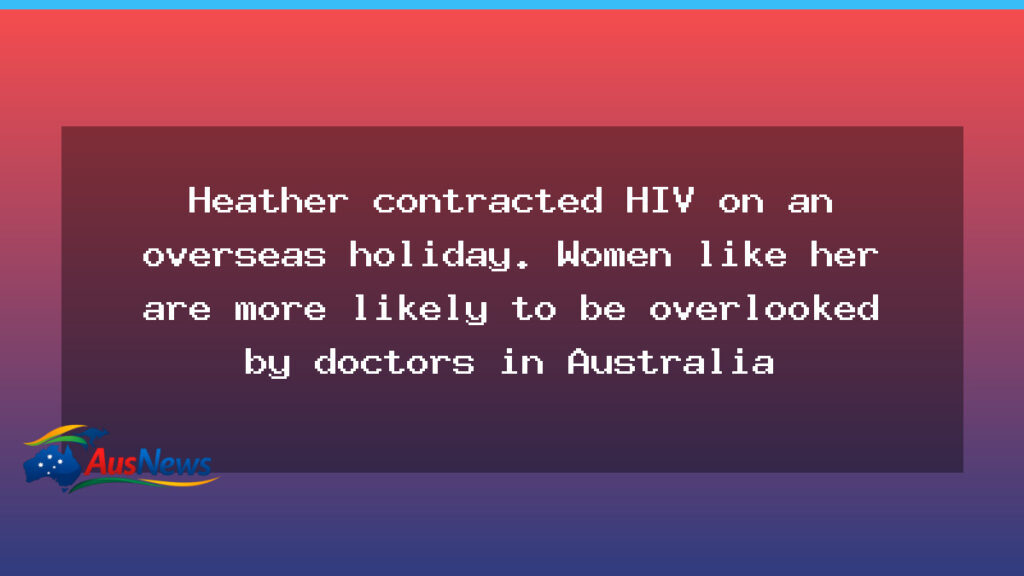
In Australia, concerns are rising that women with HIV are being diagnosed later than men, despite advances in testing and treatment. The focus keyword HIV diagnosis in women appears early in the conversation as health officials scrutinise clinical practice and testing pathways across the country. A recent public health review highlights gaps in risk assessment and the offer of testing, particularly for women who present with symptoms that may be misattributed or overlooked. This piece examines what we know, what remains uncertain, and what could shift the pattern in coming years.
Case anecdotes are not the basis of policy, but they illustrate a broader issue: some women encounter barriers to timely testing. While it cannot be claimed as a universal rule, clinicians have been shown to rely on traditional risk cues that may not capture the experiences of women. The aspiration remains clear: early HIV diagnosis improves long-term health outcomes, yet access to timely testing and appropriate care varies across settings and communities.
What we know
- Early diagnosis improves treatment outcomes and life expectancy, yet women are more likely to be diagnosed after missed opportunities for testing.
- Clinicians often underestimate HIV risk in women, which can delay testing and diagnosis.
- Most testing occurs in sexual health settings or when patients present with symptoms, rather than through routine primary care screening.
- Stigma, rural and remote access issues, and time pressures in consultations can hinder testing for women.
- National guidelines exist to expand testing, but how consistently they are implemented varies by service and region.
- There is ongoing discussion about the role of overseas travel in testing strategies and how to capture gender differences in data.
Health authorities emphasise that normalising HIV testing as part of comprehensive sexual health care, and ensuring clinicians are equipped to recognise HIV in diverse presentations, is essential. The goal is to reduce late presentations and improve outcomes for all people living with HIV, regardless of gender or location.
What we don’t know
- Exactly how large the gap is between men and women in timely HIV diagnosis across Australia, due to incomplete data in some regions.
- How often women’s HIV symptoms are misattributed to other conditions and the impact on delays.
- Which subgroups of women (by age, Indigenous status, remoteness) are most affected by late diagnosis and why.
- Whether changes in testing guidelines have translated into earlier diagnoses in practice, and where gaps persist.
- How improvements in primary care training could affect testing rates among women and what measurable effects emerge.
- The precise role of overseas travel in overall diagnosis timelines for Australian women, and how to address it in guidelines.
Officials say that clarifying these unknowns is crucial for closing the gap. By strengthening clinician education, expanding testing options, and reducing stigma around HIV, Australia can move toward earlier detection for women and better outcomes for all people living with the virus.